
Tajikistan hosts a regional renewable energy conference for Central Asia
18.09.2025
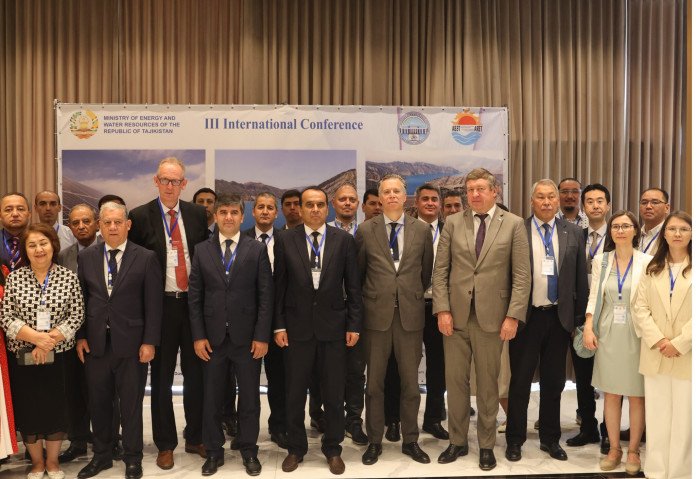
From June 23 to 25, 2025, Tajikistan welcomed over 150 participants from across Central Asia to its third annual regional conference on renewable energy. This year’s event, held in Dushanbe, focused on the Current State and Prospects for the Development of Renewable Energy in Tajikistan. The participants included government officials, researchers, developers, energy professionals, private sector representatives, and international financial institutions. The Ministry of Energy and Water Resources of the Republic of Tajikistan, the National Academy of Sciences of Tajikistan, and the Association of Renewable Energy of Tajikistan served as the main organizers of the conference, offering an important platform for exchanging ideas and strengthening cooperation between the region’s policymakers, practitioners and the scientific community. In his welcome address, Deputy Minister of Energy and Water Resources Mr. Manuchehr Safarzoda underscored both the opportunities and the challenges facing Tajikistan’s energy sector. He pointed out that Tajikistan holds sixth place globally in hydropower potential and ranks first in Central Asia, as hydropower currently supplies over 95% of the country’s electricity. “Tajikistan’s hydropower potential is three times greater than the total current electricity consumption of all Central Asian countries,” he said. However, the Deputy Minister also warned of increasing risks linked to climate change. Accelerated melting of glaciers is altering river flows and making energy production more uncertain. To address these vulnerabilities, Tajikistan is prioritising diversification of its energy sources. The National Development Strategy of Tajikistan to 2030 sets ambitious targets, including a 10% share of renewables in total generation, and an annual increase of 500 million kWh through renewable energy and energy efficiency technologies. By 2030, the government aims to add 1,500 MW of solar and wind energy capacity to meet rising domestic demand and support regional trade. The Deputy Minister also reaffirmed Tajikistan’s commitment to climate action. Despite its low greenhouse gas emissions, the country remains one of the most climate-vulnerable in the world. He cited regional infrastructure projects such as CASA-1000 and the reconnection to the Central Asian Unified Power System as examples of Tajikistan’s role in enabling cross-border clean energy flows. These efforts, he noted, contribute to emission reductions and align with global climate goals. The three-day conference featured diverse plenary and thematic sessions: the participants discussed the transition to a green economy, integration of renewables into existing grids, the potential for hydrogen development, and regional connectivity, among other topics. The conference also explored the role of research and innovation in accelerating renewable energy adoption in a dedicated session, held in partnership with the regional scientific community. Scientists and academics shared findings on local resource potential, technology adaptation, and requirements of energy systems. The conference was supported by a wide range of regional and international organisations, including the European Union, GIZ, Organization for Security and Co-operation in Europe (OSCE), Tajikistan Chapter of Association of Energy Engineers (AEE), and project “Water, Radiation and Heavy Metals Monitoring System in Central Asia”. Renewable Energy in Central Asia project, co-funded by the European Union and the German government and implemented by GIZ, supported the event and shared its main plans and key activities with the audience. Central Asia is increasingly seen as a single regional unit in the international arena, prompting the creation of joint development programmes. Mr. Sven Ernedal, Programme Manager, explained: “One of our main goals is to strengthen coordination, dispatching and management across national energy systems. Equally important is the promotion of partnerships between governments, utilities, universities, and the private sector, to ensure that knowledge and innovation are shared regionally.”